College of Humanities, Arts, and Social Sciences
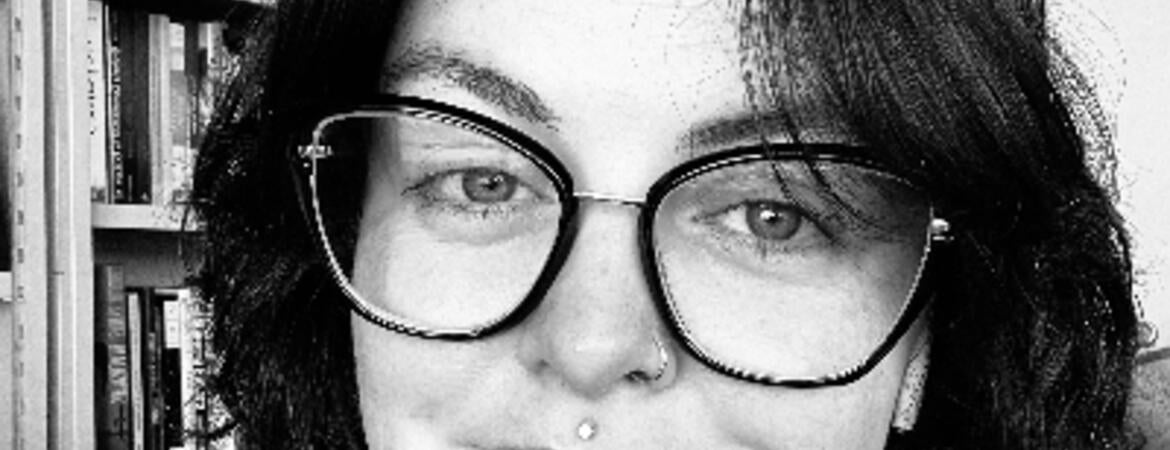

The University of California, Riverside (UCR) is proud to announce that Department of History doctoral recipient Marissa Hull has been named a 2026 Leading Edge Fellow by the American Council of Learned Societies (ACLS). Made possible by the Mellon Foundation, this highly competitive program places recent humanities Ph.D. graduates in two-year, full-time roles with nonprofit organizations to advance justice and equity.
Hull’s archival research on the vital, yet often overlooked, contributions of 19th-century d/Deaf women to the creation of American Sign Language exemplifies the profound public value of a humanities education. Now, she will transition her expertise from the academic archives into dynamic community action.
"Dr. Hull exemplifies the profound public value of a humanities education," said Daryle Williams, Professor of History and Dean of the College of Humanities, Arts, and Social Sciences. "Her work, alongside the achievements of our many ACLS-recognized scholars, highlights how UCR is translating rigorous academic inquiry into tangible community impact. We are incredibly proud to partner with ACLS to champion these vital public-facing initiatives and shape the future of the new academy."
Hull’s selection, however, is just one chapter in a much larger story. Over the last decade, UCR faculty and graduate students have earned notable recognition from the ACLS, reflecting the university's deepening institutional ties with the organization since joining the ACLS Research University Consortium in 2022. Earlier this spring, UCR hosted two ACLS program officers who met with our faculty and students.
Advocacy and the Protection of Federal Funding
This partnership comes at a critical time for the humanities. On May 7, 2026, a federal judge ruled to restore National Endowment for the Humanities (NEH) funding in a historic case where ACLS, alongside the American Historical Association (AHA) and the Modern Language Association (MLA), served as plaintiffs. This landmark victory ensures the continued protection of federal support for vital research, archival preservation, and public programming led by representing Research University Consortium members, among others.
“The recent restoration of the ACLS victory in federal court is great news for our shared cultural heritage,” said Joy Connolly, President of ACLS. “Meeting this moment requires not just funding, but brilliant, dedicated scholars who are ready to translate their training into public impact. The ACLS Leading Edge Fellowship and institutions like UC Riverside are doing exactly that—cultivating researchers to engage deeply with their communities and demonstrate why the humanities are essential to a thriving, equitable society.”
A Decade of Excellence: UCR’s ACLS Grantees
Hull joins a robust lineage of scholars from the College of Humanities, Arts, and Social Sciences (CHASS) who have utilized ACLS support to push the boundaries of their disciplines. In 2026 alone, UCR boasts multiple awardees:
- Xiao Chen (History): Awarded a 2026 Luce/ACLS Early Career Long-Term Fellowship in China Studies. His book manuscript, Punishment, Frontier, and Ethnicity in the Making of the Qing Empire (1636-1912), explores how penal systems and coerced convict labor were utilized to colonize frontier regions.
- Erika Villeroy da Costa (Dance): Received a 2026 Mellon/ACLS Dissertation Innovation Fellowship to trace the archival records, oral histories, and erasure of the pioneering Afro-Brazilian dance troupe Balé Folclórico Mercedes Baptista.
This year's cohort builds upon a legacy of ACLS support to CHASS, including:
- Elyse Ambrose (Study of Religion/Black Study): Participated in a 2024 Luce/ACLS-funded programming grant focusing on public scholarship surrounding blackqueer sexual ethics and religious archives.
- Barbara Galindo (Media and Cultural Studies): Hosted at UCR as a 2022–2024 Emerging Voices Fellow. Her success during the ACLS framework directly led to her being awarded the prestigious UCR Chancellor's Postdoctoral Fellowship.
- Raed Rafei (Media and Cultural Studies): A 2022 Mellon/ACLS Dissertation Completion Fellow focused on queer Arabic filmmaking and political transitions in the Middle East.
- Dexter Thomas Jr. (Alumnus): A 2021–2022 Emerging Voices Fellow who established the world’s largest publicly accessible archive of Japanese hip-hop music at UCR before becoming an Emmy-nominated correspondent for VICE News.
- Chelsea Silva (English): A 2019–2020 Mellon/ACLS Dissertation Completion Fellow exploring late medieval literature and bodily suffering.
- Matthew W. King (Study of Religion): Awarded a 2018 Luce/ACLS Grant to study genealogies of knowledge from the Inner Asian frontiers of late imperial China.
- Georg Michels (History): Received a 2013 ACLS Fellowship for historical research on Slavic and Hungarian cultural resistance in early modern Europe.
- Andrea Denny-Brown (English): Advanced research on medieval poetry and material culture via Mellon/ACLS support frameworks during the 2012–2013 academic year.
Structural Support and Institutional Innovation
Beyond individual fellowships, the UCR-ACLS relationship is fundamentally reshaping how the university supports humanistic infrastructure. UCR is actively engaged in major structural projects:
- Doctoral Futures (2025-Present): An ongoing initiative to reimagine graduate training for diverse career pathways.
- Leadership for the New Academy (LINA): A national initiative focused on diversifying academic leadership and redefining pathways to faculty excellence in change-resistant higher education systems.
- Mellon Mays Undergraduate Fellowship (MMUF): Since 2015, this program has provided structural support, intensive faculty mentorship, and funded research opportunities to help UCR undergraduates transition smoothly into doctoral programs.
This comprehensive, top-to-bottom commitment to the humanities has not gone unnoticed on the national stage. Fittingly, CHASS and Dean Williams will be prominently featured on the cover of the upcoming 2026 ACLS Annual Report — a visual testament to UCR’s leading role in the future of the new academy.
About the College of Humanities, Arts, and Social Sciences (CHASS)
CHASS is the largest college at the University of California, Riverside. CHASS is home to three Pulitzer Prize winners, two U.S. Poet Laureates, over 11,000 students, 600 faculty members, and more than 20 departments and programs, fostering a diverse interdisciplinary environment where critical thinking, innovation, and social responsibility thrive. Through initiatives like the Dean's Research Impact Initiative, the College continues to redefine the role of the humanities, arts, and social sciences in the 21st century at one of the world's premier R1 research universities. Learn more at chass.ucr.edu.