College of Humanities, Arts, and Social Sciences
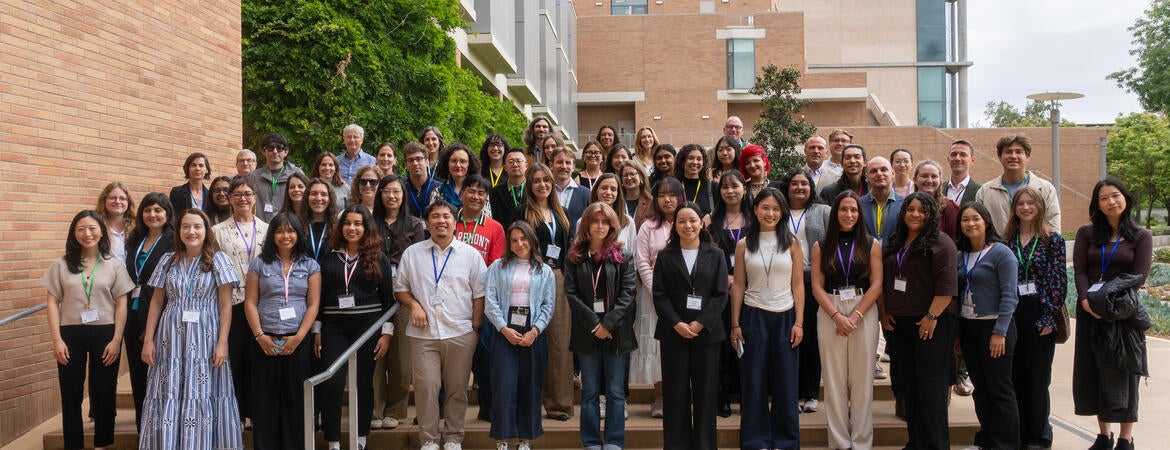
From April 24 to 26, 2026, the inaugural California Well-Being Conference (CaWBC) brought together faculty, postdoctoral scholars, and graduate students from 11 higher education institutions across the state to showcase research, exchange ideas, and build lasting professional networks. Hosted by the UCR Department of Psychology, the CaWBC was a vibrant, multi-day meeting of minds dedicated to the science of human flourishing.
Conference co-chairs and UCR psychology Ph.D. students Madison Montemayor-Dominguez and Stephen Cadieux organized the three-day academic conference under the faculty supervision of distinguished psychology professor Dr. Sonja Lyubomirsky, with additional support from a dedicated student planning committee.
Driven by a shared vision to bridge research communities across California, Montemayor-Dominguez and Cadieux set out to create a space where early-career scholars could find both a sense of belonging and opportunity.
“We wanted to create the kind of conference we would be excited to attend as early-career researchers—one that was accessible, highly interactive, and centered on graduate students and postdoctoral scholars,” said Montemayor-Dominguez. “Beyond giving people a chance to present their work, we wanted to create more time for discussion, feedback, and meaningful connections.”
Cadieux added, “It was exciting to see how much well-being research is happening across California. Bringing together scholars from 11 institutions fostered a broader community beyond individual labs and campuses.”
Determined to make the conference accessible to all, the organizers waived registration fees and secured sponsorships to cover every detail from lunches and refreshments to a Saturday evening dinner and mixer. The result was a gathering where conversation flowed as easily over shared meals as it did in the presentation halls.
Over three days, attendees engaged with well-being science as a tapestry of ideas: positive psychology, social dynamics, mental health interventions, the study of resilience, and cutting-edge research on emotional regulation, family and romantic dynamics, Indigenous frameworks of well-being, social genomics, and everyday eudaimonia. Poster sessions transformed common spaces into hubs of animated discussion, while oral presentations offered a stage for emerging scholars to share their latest discoveries.
"The 2026 California Well-Being Conference reminded me that science advances through conversation, collaboration, and community,” said Tanya Vannoy, psychology Ph.D. candidate in the Positive Activities and Well-Being Lab. “Presenting my research and discussing it with faculty, professionals, and fellow graduate students was an invaluable experience that left me with new ideas, new connections, and renewed excitement for my work."
For UCR’s own scholars, the chance to welcome peers from across California was both a source of pride and a rare opportunity to engage with the broader academic community without leaving home. “One of the highlights was seeing the many ways researchers are approaching the study of well-being—from Indigenous frameworks and romantic relationships to career transitions—and how much we can learn from one another,” Vannoy added. “Stephen and Madison did an outstanding job creating a welcoming environment that fostered curiosity, meaningful discussion, and a true sense of community.”
The conference underscored UCR’s reputation as a hub for research on happiness and psychological well-being. For Dr. Sonja Lyubomirsky, the faculty mentor who watched her graduate students guide a statewide gathering from idea to reality, the event marked a milestone worth celebrating.
“This conference really put Riverside on the map, even more than it already was, for the science of well-being,” Lyubomirsky said. “Attendees got to meet all the top researchers on well-being, happiness, and connection from 11 different colleges and universities across California.”
Lyubomirsky explained that there is no other well-being conference quite like the one her students created, which focused entirely on students. “All the presentations and posters were by students and postdocs, who are the future of the field,” she added. “I’m excited and proud of my students for putting this up. It was so unique and special, really kind of magical, and it was just a huge success.”
As the conference wrapped up on Sunday afternoon, the consensus among attendees was clear: CaWBC proved the immense value of student-led, accessible academic gatherings. Moving forward, Montemayor-Dominguez and Cadieux plan to share their complete playbook, logistics notes, and organizational framework so other scholars can adapt the event structure for their own specialized areas of research.
With student initiative, faculty guidance, and a collective commitment to well-being, UCR has shown that the pursuit of human flourishing begins right here, at home.